Sunday, 20 November 2011

Top 10 2011

Sorry for the break, busy with Bad Language, blankpages & Re:Tale things. I am coming back to the blog with a vengeance for my end of year top 10. As with last year, I will be trawling through all forms of writing for this years list of the ten best pieces of writing.

If you have any last minute suggestions, have your say in the comments below!

Sunday, 11 September 2011

Ten Years of 9/11 Culture

Today marks ten years since the September 11th terrorist attacks, and plenty of writers have tried to come to terms with the event, with varying degrees of success. We've seen everyone from literary authors, to screenwriters and comic book writers try to mark their territory. Here we're going to look at a few of these and ask ourselves what makes the good ones good, and why did the bad ones fail?

Martin Amis was quite upfront regarding September 11th, trying to coin a new term for the period of time in his Age of Horrorism article and writing a book of short stories and essays about the topic, the dire tome 'The Second Plane'. He also famously abandoned a post-9/11 novel in which the protagonist was an extremist Muslim attempting to unleash mass rape upon America. Quite. However, this was not his biggest shortcoming in the intervening years. His worst atrocity can be found in 'The Second Plane' in a short story entitled 'The Last Days of Muhammed Atta' which looks at the attacks from the point of view of one of the terrorists.

Chris Morris famous tore Amis a new one regarding that particular story here and it's a very apt criticism. But it asks a bigger question of us as writers. Can we begin to look at events in this manner, take a real life subject, a monster of a subject and try and reduce him to some bizzare caricature as Amis did, especially so soon after an event? Amis aims for satire, but misses the mark and the result is clumsy. We'll get to Morris later in this post but it's important to note that 'Last Days...' is not a new idea, Chaplin famously lampooned Hitler in 1940 - but within the jokes was a serious point, which allowed the film to end like this

Amis ends 'Last Days...' with lines such as "The core reason was of course all the killing." and a poor attempt to psychosexualise the protagonist.

Brian K Vaughan examined the events of the day through the eyes of a superhero in the first volume of Ex Machina. In the world of Machina, the current mayor of New York City is Mitchell Hundred, who used to parade around as superhero 'The Great Machine'. His actions on September 11th managed to save one of the towers of the World Trade Centre, and allowed him to win a landslide victory. The images of him soaring towards the second plane are dynamic and the afterimage of the lonely tower are a smart, poignant move. The series is a subtle blend of The West Wing and Superman and worth picking up.

Of course, Vaughan wasn't the only comic book writer to tackle the events, and credit should go to J. Michael Straczyinsky for writing possibly the worst emotional response in Spiderman #36 in which Spiderman and various heroes/villains descend on the wreckage of the WTC to help civilians. Little is said about these heroes not stepping sooner to help and the worst offender is this particular panel which depicts Doctor Doom crying. I'll pop that down again.

Doctor

Doom

Crying.

As Stan Lee wrote, 'nuff said.

The Sopranos got things spot on in the fourth, fifth and sixth season, with episodes in which Tony tries to help out the FBI by reporting some of his more ethnic colleagues to the authorities when he gets particularly paranoid. There's also this scene which is genius. Elsewhere, Spooks fumbled through an episode about suicide bombing evangelical christians.

Elsewhere, in novels, Jonathan Safran Foer wrote the beautiful Extremely Loud and Incredibly Close in which a child who lost his father in the attacks goes on search across New York for a lock to open with a key he was left. It's a modern fairy-tale and brilliantly written with a hell of an emotional punch to end.

In film, United 93 was a stunning film, and the complete polar opposite of World Trade Centre, Reign Over Me, Remember Me, and a small handful of emotionally hamfisted attempts at expressing themselves. Perhaps the most impressive film I found was a documentary on Channel 4, The 9/11 Faker telling the story of Tania Head who pretended to be a 9/11 widow. It's currently unavailable online, but if you find it, watch it.

It's always interesting to watch pop culture take hold of an event like this and use their respective mediums to express their views, and to talk about the events. In conclusion, don't read that issue of Spiderman. Please.

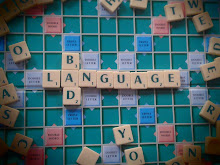
Friday, 12 August 2011

What I've Been Reading: Embassytown

Spoilers abound, as always.

China Mieville's Embassytown might just become one of the finest science fiction novels I've read.

Embassytown feels more and more relevant to events today and this year. I finished reading it two weeks ago and since then we've seen the death of Amy Winehouse and rioting across the country; both events that put this novel into a very real context.

Fundamentally, Embassytown is about communication. A hardcore science-fiction Tower of Babel about our inability to communicate with one another and the confusion that can arise from this. Telling the story of Avice who lives in the titular community of human beings occupying a city on the edge of an alien planet, the hosts of which cannot lie. The Language they speak, and it is always capitalised, is composed of two mouths speaking at once, delivering images they know to be true. They use human occupants of Embassytown as similies, when someone eats some horrible food they are able to say "It is like the girl who ate what was given to her". The human's have learned the concept of Language, but in order to communicate it, they must use Ambassdors - pairs of people connected by bio-technology who can speak this dual language and enforce it with meaning.

However, when a new Ambassador shows up and speaks, he drives the aliens into trace-like state and leaves them obsessing for more. This Ambassadors voice is a drug to them, an out-of-sync dual voice that the aliens just want more and more of.

Mieville takes his concept and twists it to an allegory about how people use language and how it can fundamentally affect people. EzRa (the ambassador) causes riots and panic in the streets, all through the use of Language.

Embassytown is a phenomenal novel, and I can't recommend it enough.


Thursday, 7 July 2011

What I've Been Reading: Non-Fiction

I love non-fiction books, and have found myself of late reading a much higher volume of them than novels. Here is a list of the ones I think are especially amazing:

Hiroshima by John Hersey is one of the finest books I've ever read. Hersey was one of the first Americans allowed into Hiroshima after the bomb and Rolling Stone dedicated an entire issue to his reportage, this reportage is contained within the book and concerns six survivors and their stories. Incredibly moving, sad and perfect; this book gives you a side to a war story that you would never imagine reading. Direct Red by Gabriel Weston is an account of a surgical student's first years, covering everything from getting a bit too involved with patients, to accidental deaths. It's funny, honest and well worth a read. Homicide by David Simon covers the year the journalist spent with the Baltimore Homicide Department, which became the basis for both Homicide: Life on the Killing Streets and The Wire.

Others worth reading:

The True History of the Elephant Man by Howell and Ford
Nothing to Envy by Barbara Demick
Supergods by Grant Morrison
Things the Grandchildren Should Know by Mark Oliver Everett
The Road to Wigan Pier by George Orwell
Shakespeare by Bill Bryson
Blockbuster by Tom Shone
Dispatches by Michael Herr
The Doors of Perception by Aldous Huxley

Friday, 20 May 2011

Faint Praise

Or, what I've been reading (in a way) for a long time, and never really talked about. In a way, writing for video games is a difficult and thankless task. No-one praises the writers of these games, despite the fact that they create some fantastic stories. And the stories they write are often more involving, smarter and funnier than a lot of films and books that I've sat through. I'm going to spotlight some of the finer scripts in gaming, along with the writers that deserve your love. Warning, spoilers abound.

Hiroyuki Owaku and Takayoshi Sato wrote one of the first games that really showed me how smart gaming could be. Silent Hill 2 still comes back to me in conversations about games that really know what they're doing. The story stays simple throughout, James, a widower heads to the town of silent hill after recieving a letter from his (very dead) wife asking to meet him there. The game is never really about fighting or exploring, more the build up of utter terror. There are large sections where you are simply walking down corridors, whilst the music builds up and up and voices emit from doorways. Most of the game involves you expecting something horrible to happen. The writnig really succeeds in the end in which you come to realise that Silent Hill is a kind of limbo or hell that you have trapped yourself in having murdered your wife. It's this twist that stays with you, having controlled this character, been in control of his actions and decisions - keeping him alive - and this discovery, that he's actually a pretty horrible man, makes you question all those decisions you made.

The Uncharted series of games really are the pinnacle of action storytelling, and indeed, the closest thing to really be described as an interactive movie. Just take a look at the trailers for Uncharted 2 and Uncharted 3 and see if they don't seem more like a film than anything. The stories themselves are close to Indiana Jones tales, each with their own macguffin that stems from the annals of history. Uncharted succeeds because its characters are realistic, funny and well rounded and above all, despite each game has the same (and increasingly expanded) cast, they are never shoehorned in. Each character has a viable reason for existing in the storyline. The highlights? Early in Uncharted 2, breaking into a museum to steal an artefact with an old friend, only for him to betray you - and later on towards the end, replicating that same event, but this time, he has a gun to your head. The way in which the game repeats certain lines as a callback from the opening scene, just shows the skill that went into crafting these brilliant titles.

Finally, Grim Fandango, one of the finest games ever to be created. With a truly brilliant story to accompany it, this point and click game is part Casablanca, part dark cartoon, with a workman-like Grim Reaper who gets caught up in a dastardly plot to extort the newly dead. The story is engrossing, epic and very very funny. It also has a method of dispatching dead folk called 'flowering', which is one of the finest ideas in a creative medium.

Sunday, 1 May 2011

NaPoWriMo: Day 30

So here we are, the final day of National poetry writing month! It's been quite a challenge writing something new every day, and it doesn't seem to let up. Bad Language will be taking part in the Something Every Day challenge for the month of May, so look out for that starting later today. As for the last poem of the month, I'm going to leave you with one for the Royal Wedding. For said occasion, we went to the brilliant Northern Quarter Street Party, but went to the free one very briefly, it was pretty messy in the latter.

Royal Wedding

Thomas street teems, revellers dance on picnic tables,
swigging eighteen to thirty pints, dancing.
Men use sinks as urinals; while somewhere,
others exchange vows of chips and Union jack
shirts.


Saturday, 30 April 2011

NaPoWriMo: Day 29

I'm going to save my royal wedding poem for the finale, and today I'm going to go for a combination of a one-word poem and a found poem. I think, living in Manchester this word conjures up all sorts of images and ideas.

Cottonopolis.

Until next time!